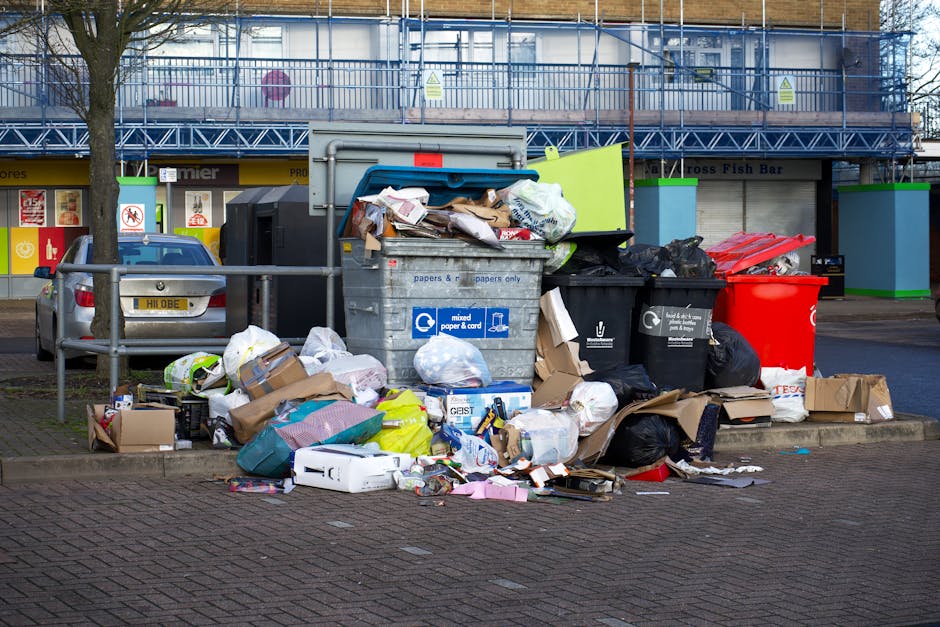
Avoid hidden rubbish removal charges in West Norwood

If you are booking rubbish removal in West Norwood, the quote can look fine at first glance and then suddenly grow arms and legs. A small "extra" here, a surprise access fee there, and before long the bill is nowhere near what you expected. That is exactly why learning how to avoid hidden rubbish removal charges in West Norwood matters. It saves money, yes, but it also saves the mild frustration of standing in the hallway wondering why a straightforward clear-out has become a negotiating exercise.
In this guide, we'll walk through how hidden fees happen, what a proper quote should include, the warning signs to watch for, and the simple checks that help you compare providers confidently. We'll also cover the kinds of waste that can change pricing, when it makes sense to choose a specialist clearance service, and how to ask the right questions before anyone turns up with a van.
Truth be told, most surprise charges are avoidable. You just need to know what to look for.
Why Avoid hidden rubbish removal charges in West Norwood Matters
Rubbish removal is one of those services where the end result is obvious - the waste is gone, the space is clear, the room breathes again. The pricing, though, can be less obvious. In West Norwood, where access can vary from wide front drives to tight terraces, basement flats, or top-floor walk-ups, small assumptions can quickly become expensive misunderstandings.
Hidden charges matter because they usually appear at the exact moment you are least interested in shopping around. You have already decided to clear the loft, remove an old sofa, or empty a garage piled with mixed household waste. You want the job done, not a debate over stairs, loading time, or "special items".
There are also trust issues. A company that is vague about pricing before the job often stays vague after it. That is a poor sign. A clear, written estimate with defined inclusions gives you a fairer basis for comparison and usually a smoother experience on the day. Nobody wants the job to end with a rueful look at the invoice. Nobody.
If you are dealing with larger or more complex clearances, it can help to compare the wording on service pages like waste removal and pricing and quotes so you can see how a provider explains its process before you commit.
How Avoid hidden rubbish removal charges in West Norwood Works
The best way to avoid surprise fees is to understand how rubbish removal pricing is usually built. Most providers base the final cost on a mix of waste volume, waste type, labour, access, loading time, disposal requirements, and any special handling needs. That sounds a bit dry, but it is the real engine behind the quote.
For example, a single armchair on the ground floor is simple. A pile of mixed builders' rubble in an upstairs flat with narrow stairs is not simple. The second job may need more labour, more time, or different disposal arrangements. If a provider does not explain that distinction before arriving, the quote can shift later. That is where the trouble begins.
Good pricing should be transparent enough that you can usually answer these questions before booking:
- What exactly is included in the price?
- Are labour and loading included?
- Does the price change if access is difficult?
- Are there extra charges for certain items?
- What happens if the load is bigger than described?
When a company asks for photos, item lists, or a short description of the property access, that is usually a positive sign. It means the estimate is being shaped around reality rather than guesswork. Slightly boring, maybe. Very useful, definitely.
If your job involves a specific type of waste, it can also be worth checking the relevant service pages first, such as builders waste clearance, garden clearance, or house clearance, because specialist jobs often have different pricing logic from general rubbish removal.
Key Benefits and Practical Advantages
Avoiding hidden charges is not only about keeping the final bill down. It also changes the whole experience from uncertain to manageable. That matters more than people think, especially when a property is already cluttered and the day feels a bit chaotic.
The main benefits are straightforward:
- Better budget control. You know what to expect before the van arrives.
- Less stress. There is no awkward back-and-forth over "unexpected" extras.
- Faster booking decisions. Clear quotes are easier to compare.
- Fewer disputes. When details are agreed in advance, the job tends to stay calm.
- Better service fit. You can choose the right provider for the specific waste type.
There is also a practical side that people often forget. Transparent pricing helps you plan timing, parking, access, and any help you might need from neighbours or a building manager. If you live in a flat and the collection day means moving things through a shared stairwell, you will appreciate knowing whether labour time is already included. It sounds like a small thing until you are carrying a wardrobe halfway down the stairs and the team says the price has changed.
For households and landlords, clear pricing also helps when you are arranging a clearance around moving day, tenancy turnover, or a refurbishment. If you need a broader home tidy-up, pages like home clearance and flat clearance can be useful reference points for understanding how different clearance jobs may be scoped.
Who This Is For and When It Makes Sense
This approach is for anyone who does not want a cheap-looking quote turning into an expensive lesson. In practice, that means a lot of people.
You may need it if you are:
- clearing out a house before sale or rental
- removing old furniture after a move
- tidying a garage, loft, or shed
- dealing with post-renovation debris
- disposing of mixed household rubbish
- arranging a business or office clearance
It is especially useful when the waste is mixed. Mixed waste can be harder to price because it may include recyclable material, bulky items, or items that need separate handling. A single tidy pile is one thing. A bit of everything is another.
For commercial customers, the stakes can be higher because downtime, safety, and access all matter. A premises manager in West Norwood who books office clearance, for example, often needs a clear arrival window, certainty on what staff will need to move in advance, and a final bill that matches the original plan. If that sounds familiar, a look at office clearance and business waste removal is a sensible starting point.
And yes, if you only have a few items, all this can feel a bit much. But even then, the same rules apply. Small job, same principle: clarity first.
Step-by-Step Guidance
If you want a simple process that reduces the chance of hidden fees, use this. It is practical, not fancy, and it works surprisingly well.
- List everything that needs removing. Be specific. "Old furniture" is less helpful than "two sofas, one bed frame, one mattress, and a broken chest of drawers".
- Photograph the waste and the access route. Include stairs, hallways, gates, parking constraints, or narrow entrances if they matter.
- Ask for an itemised or clearly explained quote. The quote should say what is included and what could change the price.
- Check whether labour, loading, and disposal are covered. This is where hidden extras often hide in plain sight.
- Ask about special items. Fridges, mattresses, sofas, appliances, and hazardous materials may have different treatment or pricing.
- Confirm timing and arrival expectations. A short collection window is useful, but only if the quote reflects it honestly.
- Read the terms before booking. Especially anything about access, cancellation, no-show charges, or load adjustments.
- Keep the agreed details in writing. Email or booking confirmation is best. A quick phone chat is fine, but written proof helps later.
If you are dealing with bulky household goods, you might also want to see whether the provider offers specialist handling pages like mattress and sofa disposal or furniture disposal. That can help you understand whether the quote is based on item type, not just rough volume.
A small but important point: if a provider says "we'll sort it on arrival", that is not automatically bad. But it does mean you should ask what happens if the estimate changes. The honest ones explain that up front.
Expert Tips for Better Results
Here are the little things that tend to make the biggest difference. Not glamorous, but effective.
- Use photos taken in daylight. A dim hallway at 8 p.m. makes everything look smaller and more mysterious than it is.
- Include the full job, not just the obvious items. People forget bags in cupboards, loose timber, rubble in the garden, or waste in the shed.
- Ask whether congestion, parking, or stair access affects the quote. In West Norwood, access can be perfectly easy one street over and awkward on the next. It happens.
- Confirm whether the provider separates recyclable material. That can affect both price and disposal method.
- Check for waste-type restrictions. Fridges, chemicals, paints, and other sensitive materials may need specialist handling.
- Keep your job description consistent. If you describe four items on the phone and eight items in reality, the quote will probably move.
One thing we often advise is to think in categories rather than just pieces. For example: bulky furniture, bags of general rubbish, renovation waste, garden cuttings, appliances. That is easier for a provider to estimate accurately than a vague "mixed stuff" description. Not poetic, but it saves hassle.
If you want reassurance around safety, look at the provider's information on insurance and safety and health and safety policy. Those pages can tell you a lot about how seriously they treat the job, without needing to read between the lines too much.
Common Mistakes to Avoid
The most common mistake is assuming the cheapest quote is the final price. Sometimes it is. Sometimes it is a trap with nice typography. You only find out after the truck is on your street and the paperwork gets lively.
Other mistakes to avoid:
- Not sharing enough detail. A rough estimate based on half the story is rarely fair to either side.
- Forgetting access issues. Steps, restricted parking, no-lift access, and long carrying distances all matter.
- Ignoring special waste. Some items cannot be handled like ordinary household rubbish.
- Assuming quotes are identical. Two quotes can both look competitive and still include very different things.
- Skipping the terms and conditions. Boring? Yes. Useful? Absolutely.
- Not asking about VAT or additional fees. If pricing language is vague, ask directly.
Another small one: people sometimes make the mistake of focusing only on the removal itself and forgetting the disposal route. If a company is vague about where waste goes, or how recycling is handled, that is worth a closer look. For more on that side of things, recycling and sustainability is a helpful page to review.
Let's face it, nobody enjoys reading terms. But reading five minutes now is easier than arguing for twenty later.
Tools, Resources and Recommendations
You do not need specialist software or fancy spreadsheets to avoid hidden rubbish removal charges in West Norwood. You just need a decent way to organise the basics.
Useful tools and resources, in plain English:
- Phone camera. Good photos are often the best quote tool you have.
- Notes app or checklist. Write down items, access details, and questions before you ring around.
- Email confirmation. Keep the quote and the agreed scope in writing.
- Measurements. Rough dimensions for bulky items can be more helpful than you think.
- Booking page review. A provider's booking process can show whether they are set up for clarity or chaos.
For households needing a broader declutter, pages such as garage clearance, loft clearance, and furniture clearance can help you think through the scope before you book.
If you are disposing of white goods or larger appliances, it is worth checking fridge and appliance removal so you can see whether your item falls into a special category. Same idea for waste with extra risk attached: hazardous waste disposal should always be handled carefully and discussed clearly before collection.
Law, Compliance, Standards, or Best Practice
When waste is being removed from a home or business, the legal and practical side should never be an afterthought. You do not need to become a compliance expert, but you should expect the provider to act responsibly and explain what happens to the waste.
In the UK, waste handling is subject to legal duties and industry expectations around correct disposal, duty of care, and safe handling. That means reputable operators should be able to explain how they manage the waste, separate materials where appropriate, and avoid passing the problem on to someone else. If a company seems casual about that, treat it as a warning sign.
Best practice also includes:
- clear description of what is and is not included
- transparent handling of restricted or special items
- safe loading and removal methods
- appropriate insurance for the work being carried out
- fair, written terms for bookings and cancellations
If you are comparing providers, the pages on terms and conditions and payment and security are worth a close read. They often reveal how the business handles disputes, payment timing, and booking expectations. Small print, yes. But useful small print.
For businesses, document handling can also matter. If old files or records are being cleared, confidential shredding is a sensible option to look at so sensitive material does not end up mixed into general waste. That is one of those jobs where "we'll just bin it" is not a great plan.
Options, Methods, or Comparison Table
Different waste removal methods suit different situations. The right choice depends on how much you need removed, how quickly it needs to happen, and how predictable you want the cost to be.
| Method | Best for | Cost clarity | Main watch-outs |
|---|---|---|---|
| Pre-quoted rubbish removal | Mixed household or business waste, bulky items, quick clear-outs | Usually high if the job is described well | Access details and special items must be declared |
| Skip hire | Longer DIY or building projects with waste generated over time | Moderate, but can vary with permits and skip size | Can be limited by space, item restrictions, and overfilling rules |
| Specialist clearance service | House, flat, office, loft, garage, or furniture-heavy jobs | High when item types are clear | Check if heavy, hazardous, or awkward items carry extra handling needs |
There is no single "best" option for everyone. A home full of bulky furniture is a different story from a weekend garden tidy-up. If you are unsure, compare the likely waste volume with guidance like what can go in a skip. Even if you do not choose a skip, the page can help you think about the type of waste you have.
The practical takeaway? Choose the method that makes the pricing easiest to understand, not the one that just looks cheapest on a headline banner.
Case Study or Real-World Example
Here is a realistic example from the kind of job people in West Norwood often face. A homeowner is clearing a loft before new insulation goes in. The space has old suitcases, broken storage boxes, a couple of chairs, some bags of general rubbish, and a few awkward lengths of timber. Nothing dramatic. Just a fairly typical pre-project mess.
At first, the homeowner asks for a quick quote based on "loft junk". One provider gives a low figure, but it is vague. Another asks for photos, asks whether the loft is boarded, and wants to know if the stairs are narrow and whether parking is available outside. The second quote is slightly higher on paper. But it is clearer, and it includes loading time.
On collection day, the difference becomes obvious. The clearer quote stays stable because the provider already understood the access and the item mix. No awkward add-ons. No surprise "stair fee". No last-minute change because the timber was harder to remove than expected. The homeowner still spent money, of course, but the whole process felt calmer and fairer.
That is the real win. Not just lower cost. Predictable cost.
Practical Checklist
Use this checklist before you book:
- Have I listed every item or waste type that needs removing?
- Have I included access details such as stairs, parking, gates, or narrow entrances?
- Do I know whether labour and loading are included?
- Have I asked about special items like mattresses, sofas, fridges, or hazardous waste?
- Do I have the quote in writing?
- Have I read the terms about extra charges, cancellations, or revised load sizes?
- Do I understand how the waste will be handled or disposed of?
- Is the provider's pricing page clear and easy to follow?
- Have I compared at least two options on a like-for-like basis?
- Am I booking the right type of service for the job?
If you can tick most of these boxes, you are already ahead of the game. That sounds simple, because it is. Simple is usually better with rubbish removal.
Conclusion
The easiest way to avoid hidden rubbish removal charges in West Norwood is to slow the process down just enough to get clarity upfront. Describe the job properly, share access details, ask what is included, and keep the agreement in writing. That small bit of care can save you money, time, and the very unhelpful feeling that the price has shifted after the work has already started.
Whether you are clearing a flat, a garage, a loft, or a business space, the same principle applies: transparency beats surprise every single time. If you choose a provider that explains pricing well and handles waste responsibly, the whole experience becomes far easier. And that, to be fair, is what most people really want.
Get a free quote today and see how much you can save.
When the clutter is finally gone and the room feels quiet again, the whole thing can feel oddly uplifting. A little more space, a little less noise, and a much better start to the next job.
Frequently Asked Questions
What should be included in a rubbish removal quote?
A clear quote should explain what waste is included, whether loading and labour are covered, and what could cause the price to change. If it is vague, ask for a more detailed breakdown before you book.
Why do rubbish removal prices change on the day?
Prices usually change when the actual job is different from the description used for the quote. That can mean more waste, difficult access, restricted parking, or special items that need separate handling.
How can I compare rubbish removal companies fairly?
Compare like for like. Check the volume allowed, what is included, whether labour is covered, and whether there are extra fees for stairs, access, or specific item types. Cheapest is not always best.
Are sofa and mattress removals more expensive?
They can be, because bulky furniture often takes more time and may need separate handling. It is sensible to check specialist service information such as furniture disposal or mattress and sofa disposal before booking.
Do I need to tell the company about access issues?
Yes. Access issues are one of the main reasons for extra charges. Stairs, long carrying distances, narrow hallways, and parking restrictions all affect how the job is priced.
Is it safer to choose a fixed-price rubbish removal service?
Fixed pricing can be helpful if the quote is based on accurate information. But a fixed price is only useful if the provider has asked the right questions first. Otherwise, the quote may be less reliable.
What if I have mixed waste from a house clearance?
Mixed waste is common in house clear-outs, lofts, garages, and flats. The key is to describe it accurately and ask whether mixed loads affect the price. Services like house clearance or flat clearance can be a useful reference.
Can hidden charges appear because of hazardous items?
Yes. Items such as chemicals, paints, or other hazardous materials often require special handling. Always flag them in advance and use a relevant service such as hazardous waste disposal if needed.
Should I get quotes by phone or by photo?
Both can work, but photos usually help reduce misunderstandings. A good provider may still ask follow-up questions, which is a positive sign rather than a nuisance.
What questions should I ask before booking?
Ask what the price includes, whether labour is covered, whether access affects the cost, what happens if the load is bigger than expected, and whether the quote is guaranteed. Those five questions do a lot of heavy lifting.
Is rubbish removal better than hiring a skip?
It depends on the job. If you want a quick, loaded-for-you service with clearer final pricing, rubbish removal may suit you better. If you are producing waste over several days, a skip may be more practical. The page on what can go in a skip can help you compare the options.
How do I know a company is trustworthy?
Look for clear pricing, transparent terms, sensible questions about access and waste type, and helpful information about safety, recycling, and payment. Trust usually shows up in the details, not the sales pitch.
What is the best way to avoid surprise fees completely?
You cannot remove every variable, but you can reduce most of them. Give accurate details, keep everything in writing, and choose a provider that explains the process clearly. That combination works better than most people expect.